
How Does a Nitrogen Compressor Work?
This article follows gas through intake, separation, compression stages, cooling, storage, controls, and delivery, with practical explanations of what changes performance.
A Practical Engineering View
Selecting a nitrogen compressor system is not a simple catalog exercise. The machine has to fit a defined gas duty, a field operating profile, a specific site, and a complete treatment and control system. Buyers who compare only motor power, maximum pressure, or headline flow often receive quotations that look similar but describe very different equipment.
This article is written for engineers, plant managers, maintenance teams, and procurement specialists who need a practical route from process requirement to purchase specification. It also answers common searches such as nitrogen compressor working principle, how nitrogen booster works, nitrogen compressor stages explained without forcing every related phrase into the text. The goal is natural technical coverage, useful decision support, and a page that can remain valuable after the purchase decision.
An accessible but technically rigorous explanation of the complete process for readers who want to understand the equipment before making decisions. This article follows gas through intake, separation, compression stages, cooling, storage, controls, and delivery, with practical explanations of what changes performance.
Separate feed air compression from finished nitrogen compression.
Define flow, purity, pressure, temperature, and duty at one common basis.
Evaluate the full package, including treatment, storage, controls, safety, and service.
The Short Engineering Answer
The right choice for how does a nitrogen compressor work is a machine or integrated package that delivers the required gas quantity at the specified purity and pressure under the worst credible site condition, while staying inside temperature, safety, energy, and maintenance limits. A defensible selection begins with a mass balance and pressure profile, then checks machine technology, treatment, storage, control response, and total ownership cost.
Search phrases such as nitrogen compressor working principle, how nitrogen booster works, nitrogen compressor stages explained, PSA nitrogen compressor process, nitrogen gas compression cycle describe related questions, but they should lead back to one engineering data set. That data set should be attached to every request for quotation and updated whenever the process changes.
Define the Compressor Duty Before Comparing Machines
The phrase nitrogen compressor is used for two different duties. One machine may compress ambient air before a PSA or membrane generator, while another machine may compress finished nitrogen after separation. Treating those duties as interchangeable is one of the most well-known causes of poor selection.
When the process needs both generation and high pressure delivery, the feed air compressor and nitrogen booster must be sized as one coordinated train. Well-prepared project teams validate this item during concept design because a last-minute revision can modify the chosen capacity, motor power, and installation layout. For this how does a nitrogen compressor work topic, the relevant question is how the condition affects delivered nitrogen rather than only the compressor nameplate. Recording the decision reduces disputes for buyer and vendor when operating environment or application demand change.
A feed air compressor handles atmospheric air and normally delivers clean compressed air to the generator at a stable medium pressure. The acceptance check is not whether the component is present, but whether it holds the guaranteed flow, pressure, temperature, and cleanliness level. The check should be made at normal load and at the most demanding credible rated point, including used filter elements and annual temperature range. When suppliers use varying assumptions, convert the data to one basis before assessing price or efficiency.
A nitrogen gas compressor receives nitrogen from a generator, storage vessel, vaporizer, or process return line and raises the gas to the final operating pressure. This requirement benefits from a formal performance guarantee rather than a spoken expectation because it influences both delivered gas performance and machine life. Where the process has short peaks, separate the base production requirement from the storage contribution before selecting capacity. This approach also creates a traceable baseline for maintenance and planned capacity growth.
Gas composition changes sealing, contamination, cooling, leakage, and oxygen exclusion requirements even when the nominal pressure appears similar. A practical engineering review reviews the gas route through the system and checks what this condition becomes at the following process step. If the value cannot be measured or traced to a supplier curve, it should be treated as an assumption and highlighted for confirmation. Recording the decision reduces disputes for buyer and vendor when operating environment or application demand change.
Decision Checks
- Write a one sentence duty statement before requesting prices.
- Mark every pressure as gauge or absolute pressure.
- State whether flow is measured at suction, discharge, or normal reference conditions.
Failure Risks
- Selecting a feed air machine for direct nitrogen service
- Using generator outlet flow as booster inlet flow without pressure correction
- Ignoring the pressure loss across treatment equipment and piping
Understand Reciprocating Compression in Practical Terms
A reciprocating nitrogen compressor traps a fixed volume of gas, reduces that volume with a moving piston, and discharges the gas after cylinder pressure exceeds the downstream pressure. The concept is simple, but real performance depends on valves, clearances, cooling, speed, and staging.
The suction valve opens when cylinder pressure falls below inlet pressure, allowing nitrogen to enter during the intake stroke. Well-prepared project teams validate this item during concept design because a last-minute revision can modify the chosen capacity, motor power, and installation layout. If the value cannot be measured or traced to a supplier curve, it should be treated as an assumption and highlighted for confirmation. When suppliers use varying assumptions, convert the data to one basis before assessing price or efficiency.
The piston then compresses the trapped gas until the discharge valve opens, sending gas to an intercooler, separator, next stage, or final receiver. The acceptance check is not whether the component is present, but whether it holds the guaranteed flow, pressure, temperature, and cleanliness level. This is also an E-E-A-T issue for practical engineering content: helpful technical direction states conditions, limitations, and verification steps instead of repeating general claims. This approach also creates a traceable baseline for maintenance and planned capacity growth.
Clearance volume remains at the end of the stroke and expands during the next cycle, reducing volumetric efficiency as pressure ratio increases. This requirement benefits from a formal performance guarantee rather than a spoken expectation because it influences both delivered gas performance and machine life. The owner team should allocate responsibility for the item because gaps often occur at the scope boundary between compressor package, separator, and plant piping. Recording the decision reduces disputes for buyer and vendor when operating environment or application demand change.
Multiple stages reduce discharge temperature, improve efficiency, and keep mechanical loads within practical limits for high pressure service. A practical engineering review reviews the gas route through the system and checks what this condition becomes at the following process step. For this how does a nitrogen compressor work topic, the relevant question is how the condition affects delivered nitrogen rather than only the compressor nameplate. When suppliers use varying assumptions, convert the data to one basis before assessing price or efficiency.
Decision Checks
- Ask for stage pressures and predicted discharge temperatures.
- Confirm cylinder lubrication philosophy and ring material.
- Review access for valves, packings, and coolers.
Failure Risks
- Excessive compression ratio in one stage
- Running with restricted cooling water or dirty air coolers
- Treating a falling flow rate as only a control problem
Compare the Main Nitrogen Compressor Types
No single compressor technology is best for every nitrogen duty. Flow, pressure ratio, gas cleanliness, operating hours, turndown, maintenance access, and allowable leakage should determine the machine type.
Diaphragm compressors isolate the gas from the hydraulic drive and are preferred where extremely low contamination or very low leakage is essential. From an engineering selection perspective, the engineering value of this detail is that it converts a generic machine name into a measured operating requirement. If the value cannot be measured or traced to a supplier curve, it should be treated as an assumption and highlighted for confirmation. This approach also creates a traceable baseline for maintenance and planned capacity growth.
Oil-free screw compressors are strong choices for continuous feed air duty and for larger low to medium pressure flows when clean air is a requirement. Well-prepared project teams validate this item during concept design because a last-minute revision can modify the chosen capacity, motor power, and installation layout. This is also an E-E-A-T issue for practical engineering content: helpful technical direction states conditions, limitations, and verification steps instead of repeating general claims. Recording the decision reduces disputes for buyer and vendor when operating environment or application demand change.
Oil-lubricated compressors can be economical, but the downstream treatment train must reliably remove liquid oil, aerosols, vapor, water, and particles. The acceptance check is not whether the component is present, but whether it holds the guaranteed flow, pressure, temperature, and cleanliness level. The owner team should allocate responsibility for the item because gaps often occur at the scope boundary between compressor package, separator, and plant piping. When suppliers use varying assumptions, convert the data to one basis before assessing price or efficiency.
Air-driven gas boosters are useful for intermittent high pressure work, testing, charging, and smaller flows, although drive-air consumption must be included in energy and service cost. This requirement benefits from a formal performance guarantee rather than a spoken expectation because it influences both delivered gas performance and machine life. For this how does a nitrogen compressor work topic, the relevant question is how the condition affects delivered nitrogen rather than only the compressor nameplate. This approach also creates a traceable baseline for maintenance and planned capacity growth.
Decision Checks
- Match the compressor map to normal and minimum flow.
- Confirm whether oil is allowed anywhere in the gas path.
- Compare maintenance skill requirements as well as initial price.
Failure Risks
- Choosing by pressure alone
- Assuming diaphragm technology is automatically economical at high flow
- Ignoring part-load efficiency and cycling losses
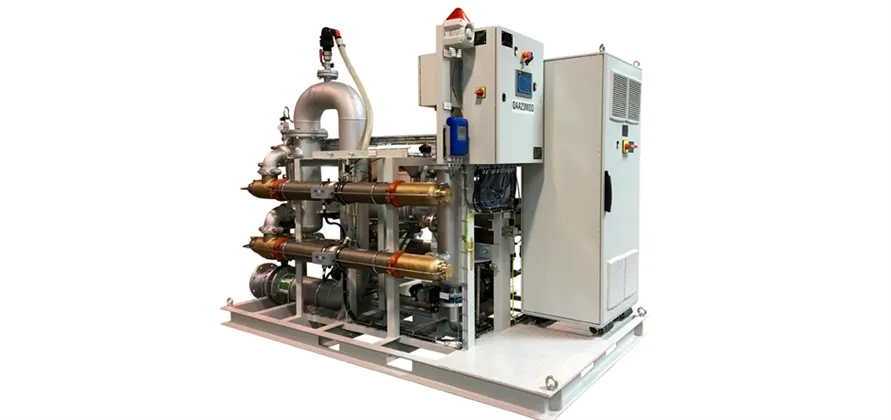
Connect Compressor Performance to the PSA Cycle
A PSA nitrogen generator alternates adsorption vessels between pressurization and regeneration. Carbon molecular sieve preferentially adsorbs oxygen and other smaller molecules while nitrogen passes through as product gas. Stable feed conditions are essential because the cycle is timed and highly sensitive to pressure, temperature, and contamination.
Higher inlet temperature can decrease adsorption performance and may add to the amount of feed air required for the same nitrogen output. In a production site, this item appears in the data when the load profile changes or local conditions move away from the reference rating. For this how does a nitrogen compressor work topic, the relevant question is how the condition affects delivered nitrogen rather than only the compressor nameplate. Recording the decision reduces disputes for buyer and vendor when operating environment or application demand change.
Water, oil aerosol, oil vapor, rust, and scale can damage filters, valves, and carbon molecular sieve, causing for long operation capacity loss. From an engineering selection perspective, the engineering value of this detail is that it converts a generic machine name into a measured operating requirement. The check should be made at normal load and at the most demanding credible rated point, including used filter elements and annual temperature range. When suppliers use varying assumptions, convert the data to one basis before assessing price or efficiency.
The generator air factor expresses how much compressed air is a requirement for a unit of nitrogen and changes with purity, pressure, temperature, and design. Well-prepared project teams validate this item during concept design because a last-minute revision can modify the chosen capacity, motor power, and installation layout. Where the process has short peaks, separate the base production requirement from the storage contribution before selecting capacity. This approach also creates a traceable baseline for maintenance and planned capacity growth.
A feed air receiver smooths compressor pulsation and demand swings so the PSA sees a more stable inlet condition. The acceptance check is not whether the component is present, but whether it holds the guaranteed flow, pressure, temperature, and cleanliness level. If the value cannot be measured or traced to a supplier curve, it should be treated as an assumption and highlighted for confirmation. Recording the decision reduces disputes for buyer and vendor when operating environment or application demand change.
Decision Checks
- Use the generator supplier air factor at the specified purity.
- Measure pressure at the generator inlet during a full production cycle.
- Protect the CMS with a complete and monitored air treatment train.
Failure Risks
- Sizing from nitrogen flow without the air factor
- Allowing wet air to enter the adsorption beds
- Assuming higher feed pressure always improves efficiency
Put Every Flow Rate on the Same Basis
Flow mistakes are common because suppliers may quote actual cubic meters per minute, normal cubic meters per hour, standard cubic feet per minute, mass flow, or compressor displacement. These figures cannot be compared until pressure, temperature, humidity, and reference conditions are defined.
Peak demand may be supplied partly by a receiver, allowing the compressor to be sized closer to average demand when the peak is short and predictable. The acceptance check is not whether the component is present, but whether it holds the guaranteed flow, pressure, temperature, and cleanliness level. This is also an E-E-A-T issue for practical engineering content: helpful technical direction states conditions, limitations, and verification steps instead of repeating general claims. This approach also creates a traceable baseline for maintenance and planned capacity growth.
Leakage, purge gas, analyzer vents, regeneration use, and future expansion should be included in the plant mass balance. This requirement benefits from a formal performance guarantee rather than a spoken expectation because it influences both delivered gas performance and machine life. The owner team should allocate responsibility for the item because gaps often occur at the scope boundary between compressor package, separator, and plant piping. Recording the decision reduces disputes for buyer and vendor when operating environment or application demand change.
Normal flow describes a gas quantity corrected to stated reference temperature and pressure, while service flow describes volume at local operating conditions. A practical engineering review reviews the gas route through the system and checks what this condition becomes at the following process step. For this how does a nitrogen compressor work topic, the relevant question is how the condition affects delivered nitrogen rather than only the compressor nameplate. When suppliers use varying assumptions, convert the data to one basis before assessing price or efficiency.
A booster inlet that receives nitrogen above atmospheric pressure handles a smaller actual volume than the same normal flow at atmospheric pressure. In a production site, this item appears in the data when the load profile changes or local conditions move away from the reference rating. The check should be made at normal load and at the most demanding credible rated point, including used filter elements and annual temperature range. This approach also creates a traceable baseline for maintenance and planned capacity growth.
Decision Checks
- Create one project flow basis and convert every vendor figure to it.
- Separate normal demand from short peak demand.
- Add a documented margin rather than a hidden oversized estimate.
Failure Risks
- Comparing displacement with delivered flow
- Mixing standard and actual units
- Adding arbitrary margins at every design step
Build a Complete Pressure Profile
A good nitrogen compressor selection uses a pressure profile from ambient intake to the final user. The profile exposes hidden losses and clarifies whether the project needs only a feed air compressor, only a booster, or a coordinated two-compressor arrangement.
Every relief valve set point and component design pressure should be reviewed against the maximum possible pressure, including fault conditions. Well-prepared project teams validate this item during concept design because a last-minute revision can modify the chosen capacity, motor power, and installation layout. The check should be made at normal load and at the most demanding credible rated point, including used filter elements and annual temperature range. Recording the decision reduces disputes for buyer and vendor when operating environment or application demand change.
Feed air pressure must be high enough at the generator inlet after losses through the dryer, filters, receiver, valves, and piping. The acceptance check is not whether the component is present, but whether it holds the guaranteed flow, pressure, temperature, and cleanliness level. Where the process has short peaks, separate the base production requirement from the storage contribution before selecting capacity. When suppliers use varying assumptions, convert the data to one basis before assessing price or efficiency.
Generator outlet pressure is normally lower than feed pressure because separation equipment, valves, and controls create a pressure drop. This requirement benefits from a formal performance guarantee rather than a spoken expectation because it influences both delivered gas performance and machine life. If the value cannot be measured or traced to a supplier curve, it should be treated as an assumption and highlighted for confirmation. This approach also creates a traceable baseline for maintenance and planned capacity growth.
A booster should be rated from the minimum available suction pressure, not the optimistic average shown on a process sketch. A practical engineering review reviews the gas route through the system and checks what this condition becomes at the following process step. This is also an E-E-A-T issue for practical engineering content: helpful technical direction states conditions, limitations, and verification steps instead of repeating general claims. Recording the decision reduces disputes for buyer and vendor when operating environment or application demand change.
Decision Checks
- List minimum, normal, and maximum pressure at each node.
- Use measured or calculated pressure drop at design flow.
- Separate operating pressure from mechanical design pressure.
Failure Risks
- Sizing from nominal pressure only
- Forgetting pressure drop at dirty filter condition
- Allowing the booster to pull the generator below uniform pressure
Choose Compression Stages from Ratio and Temperature
High discharge pressure does not by itself determine the number of stages. The important variables are total pressure ratio, allowable discharge temperature, gas properties, inlet temperature, cooling method, speed, valve design, and acceptable mechanical load.
Dividing a large pressure ratio across several stages lowers temperature rise in each cylinder and improves volumetric efficiency. Well-prepared project teams validate this item during concept design because a last-minute revision can modify the chosen capacity, motor power, and installation layout. If the value cannot be measured or traced to a supplier curve, it should be treated as an assumption and highlighted for confirmation. When suppliers use varying assumptions, convert the data to one basis before assessing price or efficiency.
Intercooling approaches the next stage suction temperature toward ambient or cooling water temperature, reducing the work required. The acceptance check is not whether the component is present, but whether it holds the guaranteed flow, pressure, temperature, and cleanliness level. This is also an E-E-A-T issue for practical engineering content: helpful technical direction states conditions, limitations, and verification steps instead of repeating general claims. This approach also creates a traceable baseline for maintenance and planned capacity growth.
Unequal stage ratios may be appropriate when cylinder sizes, rod loads, valve limits, or final cooling requirements dictate a different balance. This requirement benefits from a formal performance guarantee rather than a spoken expectation because it influences both delivered gas performance and machine life. The owner team should allocate responsibility for the item because gaps often occur at the scope boundary between compressor package, separator, and plant piping. Recording the decision reduces disputes for buyer and vendor when operating environment or application demand change.
Stage pressure monitoring helps identify valve leakage, ring wear, blocked coolers, or changes in suction conditions before a major failure occurs. A practical engineering review reviews the gas route through the system and checks what this condition becomes at the following process step. For this how does a nitrogen compressor work topic, the relevant question is how the condition affects delivered nitrogen rather than only the compressor nameplate. When suppliers use varying assumptions, convert the data to one basis before assessing price or efficiency.
Decision Checks
- Review predicted temperature for every stage.
- Ask for stage pressure alarm settings.
- Confirm cooler duty at the hottest site condition.
Failure Risks
- Using too few stages to reduce purchase cost
- Assuming perfect intercooling
- Ignoring rod load and valve velocity limits
A Realistic Selection Scenario
Imagine a system that supplies nitrogen at 8 bar and occasionally fills a 200 bar storage bank. Ambient air is compressed, cooled, dried, and filtered before the generator. The generator separates nitrogen, an analyzer confirms purity, a receiver buffers flow, and a multi-stage booster raises the gas pressure. Each component performs a distinct job, and the controls keep those jobs synchronized.
The lesson is to model the complete operating sequence. A technically correct machine can still perform poorly when storage, piping, treatment, or controls are not matched to the process. The best quotation is therefore the one that states assumptions clearly and demonstrates how each component supports the required rated point.
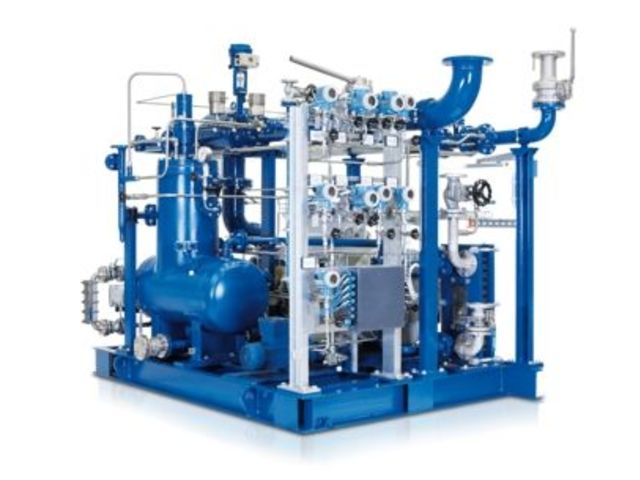
Control Heat at Every Compression Stage
Compression produces heat, and hot gas temperature affects efficiency, valves, rings, packings, lubricants, seals, adsorbent performance, and safety. Cooling design therefore belongs in the selection process, not as an afterthought during installation.
Water-cooled machines can maintain more stable temperatures, but cooling water quality, flow, pressure, treatment, and freeze protection must be defined. The acceptance check is not whether the component is present, but whether it holds the guaranteed flow, pressure, temperature, and cleanliness level. This is also an E-E-A-T issue for practical engineering content: helpful technical direction states conditions, limitations, and verification steps instead of repeating general claims. This approach also creates a traceable baseline for maintenance and planned capacity growth.
Intercoolers reduce the work of the next stage, while aftercoolers lower gas temperature before dryers, filters, storage, or process piping. This requirement benefits from a formal performance guarantee rather than a spoken expectation because it influences both delivered gas performance and machine life. The owner team should allocate responsibility for the item because gaps often occur at the scope boundary between compressor package, separator, and plant piping. Recording the decision reduces disputes for buyer and vendor when operating environment or application demand change.
High discharge temperature may indicate restricted cooling, valve leakage, excessive pressure ratio, fouled passages, or abnormal suction conditions. A practical engineering review reviews the gas route through the system and checks what this condition becomes at the following process step. For this how does a nitrogen compressor work topic, the relevant question is how the condition affects delivered nitrogen rather than only the compressor nameplate. When suppliers use varying assumptions, convert the data to one basis before assessing price or efficiency.
Temperature sensors should be placed at meaningful stage outlets and connected to alarms and shutdowns with documented set points. In a production site, this item appears in the data when the load profile changes or local conditions move away from the reference rating. The check should be made at normal load and at the most demanding credible rated point, including used filter elements and annual temperature range. This approach also creates a traceable baseline for maintenance and planned capacity growth.
Decision Checks
- Provide maximum ambient and cooling water conditions.
- Review heat rejection data before finalizing the room.
- Plan cooler cleaning access.
Failure Risks
- Rating equipment only at mild ambient temperature
- Recirculating hot discharge air into the intake
- Using untreated cooling water in narrow passages
Integrate Controls Across the Entire Nitrogen Train
A reliable installation coordinates the compressor, dryer, filters, generator, receivers, booster, analyzer, and application demand. Independent local controllers can work, but their set points and permissives must be designed as one operating sequence.
Receiver pressure signals can coordinate generator production and booster operation while preserving a stable process supply. In a production site, this item appears in the data when the load profile changes or local conditions move away from the reference rating. Where the process has short peaks, separate the base production requirement from the storage contribution before selecting capacity. When suppliers use varying assumptions, convert the data to one basis before assessing price or efficiency.
Alarms should distinguish process warnings from protective shutdowns and ought to identify the first-out cause after a trip. From an engineering selection perspective, the engineering value of this detail is that it converts a generic machine name into a measured operating requirement. If the value cannot be measured or traced to a supplier curve, it should be treated as an assumption and highlighted for confirmation. This approach also creates a traceable baseline for maintenance and planned capacity growth.
Remote monitoring supports the review when it records trends in pressure, temperature, purity, dew point, runtime, starts, and maintenance condition. Well-prepared project teams validate this item during concept design because a last-minute revision can modify the chosen capacity, motor power, and installation layout. This is also an E-E-A-T issue for practical engineering content: helpful technical direction states conditions, limitations, and verification steps instead of repeating general claims. Recording the decision reduces disputes for buyer and vendor when operating environment or application demand change.
The feed compressor should maintain generator inlet pressure without excessive cycling or long unloaded periods. The acceptance check is not whether the component is present, but whether it holds the guaranteed flow, pressure, temperature, and cleanliness level. The owner team should allocate responsibility for the item because gaps often occur at the scope boundary between compressor package, separator, and plant piping. When suppliers use varying assumptions, convert the data to one basis before assessing price or efficiency.
Decision Checks
- Write a cause and effect table.
- Define restart behavior after power loss.
- Assign ownership of the master control sequence.
Failure Risks
- Allowing controllers to fight one another
- Restarting into a closed valve
- Relying on one pressure switch without trend data
Connect Nitrogen Design with Clean Compressed Air
Nitrogen performance starts with the quality and stability of the compressed air supply. For related compressor technology, package configurations, and clean-air engineering references, review our main website for
oil-free air compressor solutions
. The external resource supports the feed-air side of the how does a nitrogen compressor work selection while this site remains focused on nitrogen generation and nitrogen compression.
Frequently Asked Questions
Does a nitrogen compressor create nitrogen?
Usually no. A compressor raises gas pressure. Nitrogen is produced by a PSA, membrane, cryogenic plant, vaporizer, or another source. The compressor may supply feed air to the generator or compress the finished nitrogen. A supplier should verify this item against the real duty rather than relying on a generic brochure value.
What happens inside a piston cylinder?
The piston moves down to draw gas through the suction valve, then moves up to reduce the trapped volume. When cylinder pressure exceeds discharge pressure, the discharge valve opens and gas flows to the next stage or receiver. The answer can change when purity, temperature, altitude, duty cycle, or downstream storage changes.
Why does gas become hot?
Compression work increases gas temperature. Intercoolers and aftercoolers remove heat to improve efficiency, protect components, and prepare gas for drying, storage, or the next compression stage. Record the selected basis in the operating information sheet so it can be checked during commissioning and maintenance.
Why are there several stages?
Several stages divide a large pressure ratio. This lowers temperature rise per stage, improves volumetric efficiency, reduces mechanical stress, and makes very high discharge pressure practical. A supplier should verify this item against the real duty rather than relying on a generic brochure value.
How does a PSA generator fit into the process?
The feed compressor supplies clean compressed air to alternating adsorption vessels. Carbon molecular sieve retains oxygen more strongly, allowing nitrogen to leave as product gas while the other vessel regenerates. The answer can change when purity, temperature, altitude, duty cycle, or downstream storage changes.
What controls compressor output?
Depending on the machine, output may be controlled by start and stop, load and unload, variable speed, clearance devices, bypass, or pressure regulation. Receivers and master controls stabilize the complete process. Record the selected basis in the operating information sheet so it can be checked during commissioning and maintenance.
What makes the compressor stop automatically?
Protective shutdowns can respond to hot gas temperature, high pressure, low suction pressure, low lubrication pressure, cooling failure, excessive vibration, motor overload, or another defined unsafe condition. A supplier should verify this item against the real duty rather than relying on a generic brochure value.
How can operators tell whether it is working well?
Track flow, pressure, temperature, purity, dew point, power, vibration, leakage, and receiver recovery time. Compare current trends with the commissioning baseline rather than relying only on whether the machine is running. The answer can change when purity, temperature, altitude, duty cycle, or downstream storage changes.
Turn Process Data into a Clear Compressor Specification
A reliable project involving how does a nitrogen compressor work begins with accurate running data. Share the required gas source, flow, purity, suction pressure, discharge pressure, duty cycle, operating environment, and applicable standards. Our team can review the system boundary and identify the technical questions that should be resolved before a quotation is finalized.